Featured items from our Collection
1904 Repurposed Street Car home
When the devastating fire swept through Haileybury on October 4, 1922, hundreds of homes were destroyed, leaving families homeless and in urgent need of shelter. Help arrived in the form of 87 retired streetcars made available by the Toronto Transit Commission (TTC).
The streetcars had originally belonged to the Toronto Railway Company (TRC). When the TTC took over the TRC’s streetcar stock, it began replacing the older cars in 1921. No longer needed for regular service, some found a new purpose in Haileybury, where they were converted into temporary homes, providing families with shelter, heat and storage during the difficult months following the fire.
Some of these streetcars remained in use for decades as garages and tool sheds. Over time, however, they gradually disappeared, leaving behind a remarkable reminder of the community’s recovery.
Today, the Haileybury Heritage Museum is home to a 1904 Toronto Railway Company streetcar, one of its signature exhibits. The car was restored over approximately four months and, by 1992, had been returned to its former appearance.
Inside, the streetcar has been arranged to illustrate the cramped living conditions experienced by families who made these unusual homes their refuge. More than a surviving piece of transportation history, it offers visitors a tangible connection to one of the most significant events in Haileybury’s past—a story of hardship, resourcefulness and community resilience.
Ruggles the Fire Truck
Purchased by the Haileybury Fire Department in 1923, in the aftermath of the Great Fire, the 1922 Ruggles Fire Pumper marked a new chapter in local firefighting. It was the first mechanized fire pumper to arrive in Northern Ontario and is believed to be an exceptionally rare survivor of its kind.
When the pumper first arrived in Haileybury, it was driven around town so residents could hear its siren and learn to recognize the new fire alarm. It went on to serve the community for more than 30 years, remaining in active service until at least 1959, after which it was finally decommissioned.
The Ruggles has a remarkable story of its own. Its manufacturer, the Ruggles Motor Truck Company of London, Ontario, operated for only about five years, making surviving examples especially significant. Today, Haileybury's Ruggles Fire Pumper stands as a rare and tangible reminder of the community's determination to rebuild after the Great Fire—and of the evolution of firefighting in Northern Ontario.
M.V. Beauchene Tugboat
The M.V. Beauchene was one of more than 50 tugboats that worked the waters of Lake Temiskaming and the Upper Ottawa River between 1882 and 1965. Owned by the Upper Ottawa Improvement Company (I.O.C.), the diesel-powered tug spent decades towing log booms to lumber mills and gathering stray logs each spring.
In 1996, the Haileybury Heritage Museum purchased the retired, deteriorating vessel and undertook its recovery and restoration. On June 22, 1996, the Beauchene began its journey to Haileybury under its own power. A major obstacle was the Temiskaming Dam, which the tug was lifted over by crane before continuing its journey, with an overnight stop at the historic Opemican Depot.
The Beauchene eventually arrived at the Haileybury Marina and was brought to its new home at the museum. Its recovery and restoration were made possible by the dedication of local volunteers, former I.O.C. employees and Ontario Hydro staff, whose efforts helped preserve an important part of the region’s logging and transportation history.
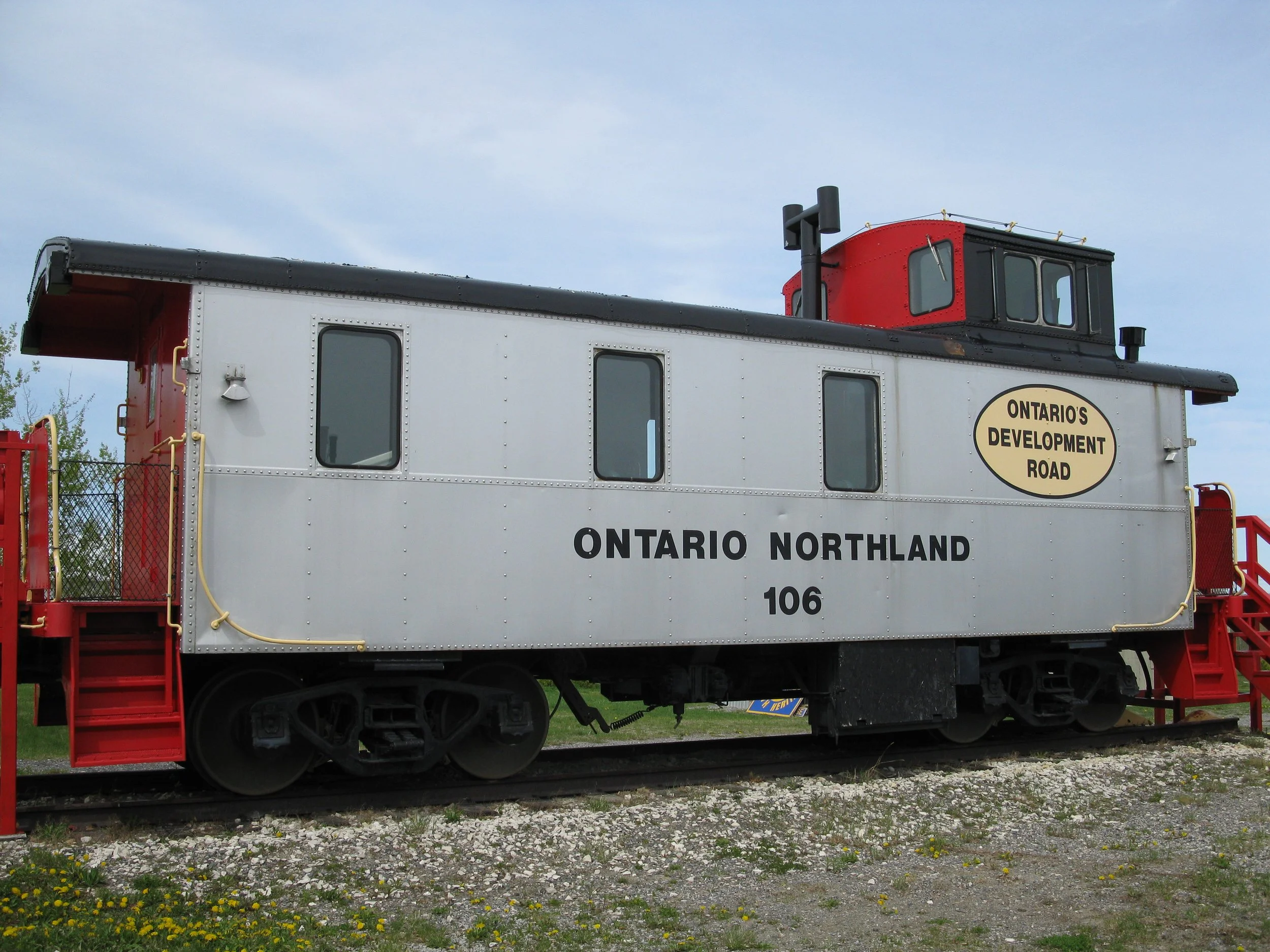
ONR Caboose
With support from a federal job creation program, museum staff undertook the restoration of both the interior and exterior. Museum officials viewed the caboose as an important addition to the museum's growing collection of transportation artifacts, joining exhibits such as the streetcar, tugboat, and model railway.
The caboose stands as a reminder of the vital role that railways played in the development of Temiskaming communities and Northern Ontario.