
Matabanick Trail
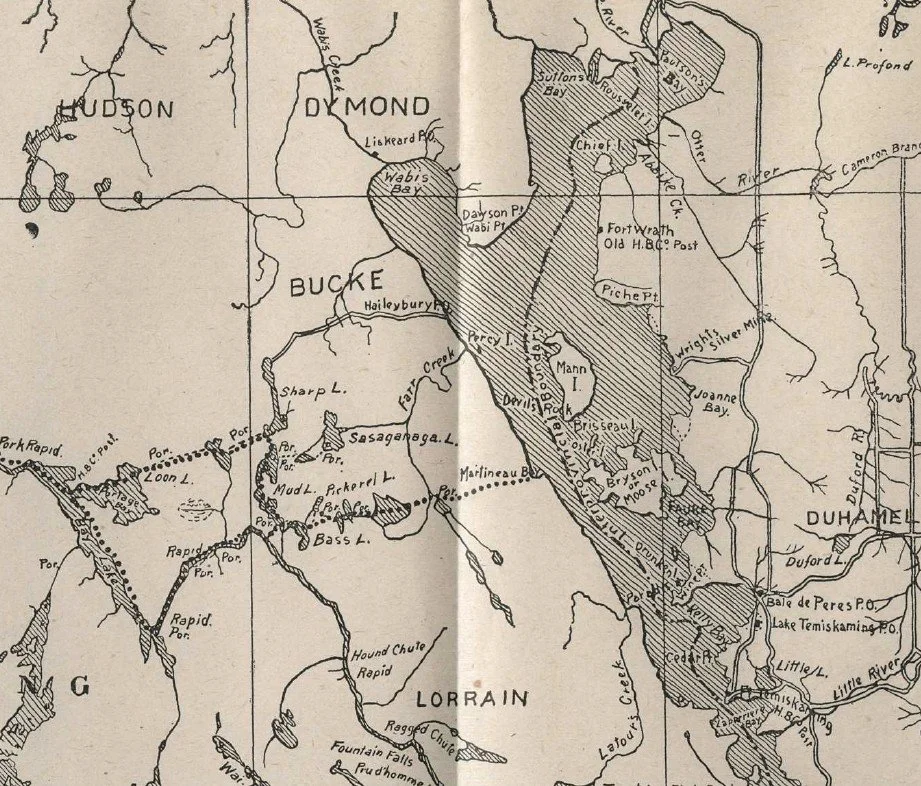
A portion of a 1901 map showing canoe routes in Temiskaming - note the double line that originates on the lake at Haileybury. This is a portion of the Matabanick Trail. Travellers made their way on foot west to the northern tip of Sharp Lake, then proceeded beyond by canoe. Indigenous History of the Haileybury Area
Long before the Town of Haileybury was established, the area was an important Indigenous travel and portage location.
The site was known as Matabanick, an Indigenous name generally translated as “the place where the trail ends” or “where the trail comes out.” The Matabanick Trail connected the Montreal River with Lake Temiskaming, providing a route between two waterways without requiring travellers to make the entire journey by water.
The trail formed part of a much larger network of rivers, lakes and overland routes used by Indigenous peoples for travel, trade and communication. Historical sources describe the Matabanick route as an ancient First Nations portage that remained in use into the early twentieth century.
A Place of Travel and Gathering
Matabanick was more than a transportation route. Its position at the meeting of land and water made it a natural place for people travelling through the region.
From Lake Temiskaming, travellers could connect with the Ottawa River system, while routes from the Montreal River watershed led into the interior. The location brought together people travelling by different routes and waterways.
Archaeological evidence in the Haileybury area also indicates that Indigenous peoples established seasonal camps here thousands of years ago. This evidence provides a glimpse into a history that extends far beyond the period documented in European written records.
Indigenous History and European Settlement
European settlement did not mark the beginning of the history of this place. European traders and settlers entered a landscape that already had established Indigenous routes, places of gathering and long-standing connections to the land and waterways.
When Hudson's Bay Company trader Charles Cobbold Farr acquired land at Humphrey's Depot in the late nineteenth century, the location was already known by its Indigenous name, Matabanick. Farr later established the settlement that became Haileybury.
As railways, mining, forestry and agriculture expanded, the landscape changed dramatically. Some of the transportation routes used by newcomers, however, followed pathways that Indigenous peoples had used for generations. The name Matabanick remains an important reminder of that earlier history.
Indigenous Peoples Today
Indigenous peoples continue to be an important part of the communities and identity of the Temiskaming region.
Temiskaming Shores and the surrounding area are home to Indigenous people and communities, including First Nations and Métis people. According to the 2021 Census, 855 people in Temiskaming Shores identified as Indigenous.
The story of Matabanick is therefore part of a much longer history—one that continues today. The lakes, rivers, forests and trails of Temiskaming remain connected to Indigenous culture, knowledge, history and community.